

Anatoly Guin: Hello, friends! Hello, Boris. I want to congratulate our investors and congratulate ourselves, because recently our platform has learned — or rather, Boris and our programmers taught it — to recognize not just images, but specifically charts. That’s an important capability. Recently Yandex published a major paper boasting that they can now work well with charts. We, of course, handle charts in a completely different way than Yandex, because our overall concept of artificial intelligence is different.
Nevertheless, progress has been made and experiments conducted. Very interesting results were obtained, and notably — at the start of our work we made one curious mistake. I’ll hand the floor to Boris, who ran those experiments; in fact, at present there is no one in the world capable of working with charts using PANC™ technology — only Boris and our programmers. Boris, the floor is yours…
Boris Zlotin: Thank you for the flattering assessment. I’ll add to what you said that PANC™ is, broadly speaking, a recognition system. But it’s not that simple.
For example, recognizing a face is straightforward. Recognizing a chart is problematic. We worked, for instance, with electrocardiograms: a thin ECG trace over grid lines. The system recognizes whatever occupies more of the screen and hardly notices the actual chart.
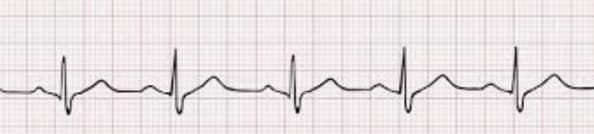
A person can recognize a simple image even against a background of gridlines and noise. A machine has no understanding of what is truly important in the image. We did it differently. We took the numerical recording of an electrocardiogram (all cardiographs produce one) and treat it as a mathematical table. We are not the first — nor the thousandth — to recognize charts mathematically. The problem is that mathematical tools alone are insufficient for reliable recognition.
We used a clever trick: we process the chart mathematically, then convert it into a clean image that contains only the graph itself, and we recognize it visually. We exploit a capability that is highly developed in humans. Each human eye contains on the order of 100 million photoreceptors; imagine the powerful recognition capacity that entails. By comparison, each ear has only about 20,000 sensors. Our brain is exceptionally well adapted to recognizing images. The software we built to operate like a brain is likewise well suited to them. We move from the mathematical representation to the visual one, and then back to mathematics, ultimately producing appropriate numerical results — measures of similarity between a given ECG and the cardiograms of sick and healthy individuals in our library.
But there is the so‑called “whole‑image problem,” or Gestalt problem, and it is not simple. A few years ago there was a report: excellent software had been developed on conventional neural networks to distinguish animals — dog, cat, bear — and it worked well. It even distinguished polar bears from other bears and animals. Yet it turned out that if you removed the polar bear from the image, the system still “found” it. The system had learned to recognize snow and ice as polar bears.
Anatoly Guin: Yes, I remember that case.
Boris Zlotin: What is crucial? Our comparator works with libraries. That’s beneficial because you don’t have to train a neural network and incur large costs. But images for the PANC™ neuromorphic comparator must be preprocessed for recognition — and images vary widely. For example, photographs of people must be prepared differently than charts; natural landscapes must be handled differently than portraits; and so on.
We developed a comparator, a “matcher”, and we’re proud of it. It can compare one object against thousands or hundreds of thousands of others in the same time interval; i.e., all comparisons occur in parallel. In conventional programming, parallelism is curtailed by Amdahl’s law; for the PANC™ neuromorphic comparator, that limitation does not apply. We also have a system for building libraries. For example, preparing a system to recognize human faces or pots in an e‑commerce catalog is straightforward.
However, some domains require specialists. You cannot prepare a high‑quality library for chest radiographs without a physician who can read X‑rays. We do not need a hundred thousand images as with conventional deep networks; roughly a hundred—or perhaps two or three hundred—will suffice. But those images must be processed in specific ways. Standard toolkits exist to do this; Python packages, for instance, include the necessary utilities. Still, work is required, and here we have a significant advantage.
For example, you create a training set for any object class—say, pots—and train a conventional neural network to distinguish pots. Later you need a different network that recognizes pots, frying pans, colanders, and other items. With traditional networks you must retrain from scratch. With our approach you build the library once and reuse it anywhere. Anyone can access a “public library” and find what they’re looking for.
Anatoly Guin: Boris, I’ll add one advantageous detail. We currently prepare libraries manually, but in principle one can develop software to rapidly generate any required prototypical images for standard object types, right?
Boris Zlotin: You’re both right and wrong. Our work is not purely manual but “hybrid” — our own comparator greatly assists in building libraries for itself. We collect, say, a thousand images of various animals, load them into the comparator, select, for example, a dog and run recognition. The comparator selects images similar to that dog. We review the first ten or twenty, discard a mistakenly included cheetah (they look like dogs), click a button and form the class. Then we do the same for another class, a third… Classes are formed semi‑automatically and very quickly.
There is another very useful additional advantage. When you recognize a new image against an existing library and press a button, it becomes part of that library. Next time it will be included in recognition as well. Imagine that a thousand people each add images. We were once commissioned to evaluate the feasibility of software to recognize plant diseases from leaf condition. The assessment showed that very large libraries are needed — many species, varied leaves, many diseases and symptoms. Our proposal was simple: let’s make a small initial library — for example, just a thousand images.
The client said the software wouldn’t recognize anything properly, and at least one hundred thousand images were needed. I said: “No, it’s fine. A thousand images will detect some of the main diseases. Remember Pareto’s 20/80 rule in economics? Twenty percent of effort solves eighty percent of problems. Then you deploy the software to a thousand people and each will evaluate their own fields. If each makes ten assessments a day, the next day you already have ten thousand informational objects for the library.”
So, by creating a small initial library we can enable its automatic augmentation and extension. Of course, the extension will proceed under specialist supervision, but the key is that we turn on positive feedback to improve our libraries — and that is a very powerful advantage.
Anatoly Guin: In fact, we could end the discussion here because everything’s already clear enough. I only wanted to remind you of one difficulty we encountered because it’s rather amusing. Do you remember, at the very start of the tests two clearly different cardiograms were compared and, although the comparator recognized them, the difference in similarity score was very small and unconvincing… Why? That’s when the idea arose that the background conveys more information for scoring than the graph itself. The problem was solved in three seconds: remove the background with the simplest tools and compare the graphs directly — everything works.
Boris Zlotin: You’re oversimplifying. In many cases removing the background is not so easy, because to remove the background you must first recognize what is background and what is the object to be recognized. That task is solvable by comparison methods, though not trivial. Another problem: look — I sit exactly in the center of the screen. When I shift from the center or turn slightly, I become harder to recognize. If my head is tilted right or left, lowered, or looking up… The recognition problem is solvable here as well — one can, for example, detect the position of the nose and, relative to it, detect the face, its tilt, rotation, etc.
All this is possible because our recognition is very fast; we can train the machine to take an input image and “play” with it — slightly increase the scale, slightly decrease it, add tilts, rotations…
Most importantly: consider a computer with no training, only an operating system. A good thing. Now install Word, PowerPoint, notes, mail, games and another thousand different applications to work properly… But everything needs a base — the computer.
We created such a base for artificial intelligence — a recognition system based on libraries and a comparator, like the structure in a human head. Now it’s a matter of developing many applications and libraries. We are working on that — but no one can encompass the boundless. There are opportunities here for thousands upon thousands of new businesses…
Anatoly Guin: Thank you, Boris. We’ll conclude this dialogue here. The next one will be no less interesting: Boris and I will recall the Mona Lisa. Everyone remembers the Mona Lisa, right? We’ll talk about her — and at the same time debunk one strong stereotype.