
Anatoly Guin: Boris, I have been speaking with potential investors, and they ask me in which domains PANC™ is critically essential—where development stalls without it—and where PANC™ could deliver a huge breakthrough as early as tomorrow. I will share my initial, very simple thoughts.
First, drones. Their advancement requires equipping them with capable artificial intelligence, yet the cost of high‑quality hardware can be far higher than the cost of the rest of the drone.
Second, chemical reactors and similar processes. These involve rapid reactions, and their sensor systems must aggregate data extremely quickly in order to determine the correct response and avoid explosions, accidents, defects, etc. In such settings PANC™ is indispensable.
Third, automobiles. If Musk’s cars incorporated PANC™, it is conceivable that a Tesla could already be driven solely by video cameras, as Musk originally intended to achieve with AI. That approach failed, and the vehicles reverted to the conventional suite of radars and lidars.
Moreover, the ability to continually retrain an electronic driver is highly desirable, and with PANC™ this is straightforward. The same applies to autopilot systems, where rapid decision‑making is required.
These are relatively straightforward sectors in which a neuromorphic comparator could spur colossal progress. There are, of course, less obvious application areas as well, and I ask you to illuminate that question. In truth, what I’m saying is that PANC™ could replace the functions currently performed by artificial neural networks in many fields.
Boris Zlotin: You mentioned Musk. His main problem is training a car so that it is not dangerous. That requires expensive neural‑network filters, massive computational power for training, and overall monstrous resources.
PANC™ does not need training. Initially it is sufficient to create a relatively small library and a simple comparator on a very inexpensive microchip. Then hundreds of thousands of drivers will receive a small add‑on device that does not drive the car for them but merely observes how the human driver operates the vehicle and automatically augments the library. Soon a vast repository of road‑situations will be assembled, giving us a ready‑made auto‑driver. PANC™ requires only a modest amount of storage; all the information resides within the car itself. All cars will be networked, so any new driving insight or newly identified hazard is instantly propagated to every other vehicle. This continuous, on‑the‑fly retraining of the auto‑driver is one of the most important capabilities: human reactions are immediately translated into machine knowledge.
Anatoly Guin: Boris, this raises a question. Today large language models (LLMs) are tuneable, and each person can, in principle, create a small language model (SLM) on their own computer and continue training it on specific data. Is that the same thing, or is PANC™ trained and tuned differently?
Boris Zlotin: An LLM consists of a core component that is trained over a long period at great expense—tens of millions of dollars. This stage is called pre‑training. When I pose a question to an LLM and say, “In searching for an answer, consult my operators for inventive‑task solutions and propose a good inventive solution,” the model temporarily loads those operators into a short‑term memory without altering the pre‑trained weights. That information is stored in a separate repository, which creates a sharp problem: the LLM does receive additional knowledge, but those “supplementary facts” never become part of the base pre‑training. Consequently, millions of users have, in one way or another, fine‑tuned LLMs for their own tasks, producing a fragmented, disorganised heap of contradictory supplemental data. Attempts to use that heap undermine the logic of the original pre‑training and cripple the machine’s intellectual capacity. In practice, it has been observed that the more new information a model ingests, the poorer its performance becomes. It is therefore unsurprising that LLM developers continually release new versions despite the enormous costs involved.
A pre‑trained system is an information network that cannot be altered, supplemented, or improved incrementally. Each new version requires a full re‑training cycle lasting months and costing tens of millions of dollars. By contrast, in PANC™ each neuron represents a discrete piece of knowledge that is independent of other neurons. Thus, at any moment one can modify, add, or remove information in the existing recognition library without affecting the rest of the data.
PANC™ can be supplemented, altered, reduced, partitioned, and so on at any time, without disrupting ongoing work. This provides an instantaneous capability for rapid, real‑time upgrades, which will have a profound impact on the next application area that, for me, is perhaps the most important.
Medicine—diagnostics, optimization of medical technologies, drugs, and health‑maintenance systems. Unfortunately, current regulatory methods of the U.S. Food and Drug Administration do not prevent rare allergies or the prolonged harmful effects of medicines.
A striking example: the widely used over‑the‑counter analgesic acetaminophen (Tylenol), sold since 1960, has been found to harm fetuses when taken by pregnant women, increasing the risk of autism in the child. In the post‑war era there was roughly one autistic child per 10,000 births; today the ratio is about one per twelve children—a frightening increase.
If a network existed that continuously and objectively monitored the health status of millions of people, it could quickly detect correlations between the distribution of a drug and emerging mass health problems. Today such a network is impossible even on the most advanced supercomputers because of the sheer number of individuals and parameters to track. On a PANC™‑based platform, however, this becomes feasible, albeit still challenging.
Anatoly Guin: So, in that case we could monitor epidemics, correct?
Boris Zlotin: In early 2007 we were working for the U.S. Department of Health. At that time we devised a method for epidemic monitoring. The idea is simple. We record dozens of parameters for each person. This is easy to do: a wristband or quick public-measurement devices — you insert your arm into the device and in a minute it records many parameters. Then, every day, parameters from millions of measurements across the country are compared with yesterday’s values, with the values for the same day last year, or with values from similar regions or zones with comparable weather, and so on.
If, suddenly, a parameter in a particular city changes sharply and with statistical significance — for example, sleep disturbances, spikes in temperature (a sign of malaria and some other illnesses), blood-pressure anomalies, gastrointestinal dysfunction, etc. — we do not yet know what has happened, but only two hypotheses are plausible: an epidemic or a mass poisoning. A team is then dispatched to selected individuals to determine what is actually occurring.
Anatoly Guin: Boris, it’s even more powerful, because you can immediately track the geography of disease spread, and that geography — together with the derivative given by the rate of spread — will tell us at once whether we are facing an epidemic, a poisoning, or something else. Moreover, we immediately obtain a numerical estimate of contagiousness.
Boris Zlotin: There are many variants; the key requirement is that a machine be able to process them. But in 2007 there were no computers capable of handling this. They do not exist today either — the computational volumes required are too large. Amdahl’s law in computer science limits the ability to parallelize computations. PANC™ achieves something colossal: it replaces computation with comparison — and the constraints imposed by Amdahl’s law disappear.
I will now describe another major application area of PANC™, tied to the shift from computation to comparison.
In economics, physics, and other sciences there is an important concept — “scattered information.” It denotes a set of disorganized, often in some respects redundant and in others insufficient, conflicting and fuzzy data arriving via multiple channels from diverse sources. Typical problems associated with scattered information arise in business, social management, and in the study of complex natural systems — ecology, geology, climatology, medicine, and so on.
Extracting the necessary knowledge from streams of scattered information is often a very difficult task, requiring enormous computational power. A promising direction here is to replace the purely computational paradigm with a comparative-computational paradigm.
Anatoly Guin: Does this mean that PANC™ will enable the creation of a General Artificial Intelligence, a powerful artificial sage that will render humans unnecessary?
Boris Zlotin: Both yes and no. It will probably be possible to create such a “sage” to satisfy scientists’ curiosity — like building a robot that can eat sushi. But what purpose would that serve for people?
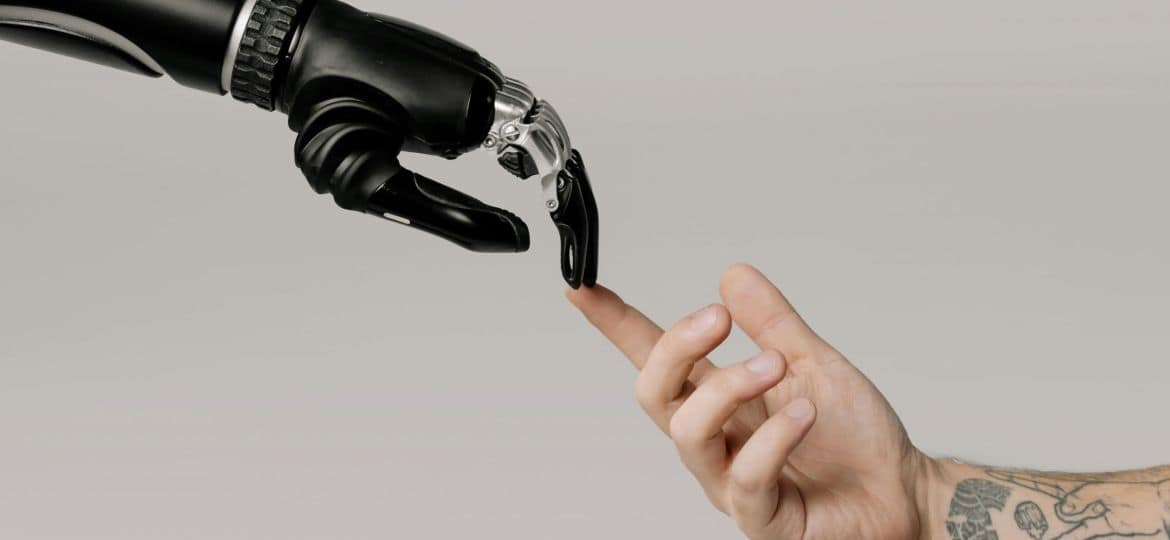
This year marks the 100th anniversary of Douglas Engelbart — one of the earliest researchers in human–machine interfaces and the inventor of the computer mouse, graphical user interfaces, hypertext, the text editor, online conferencing, and much else. In 1962 he formulated a brilliant concept: “Humanity does not need an autonomous superintelligent AI; what is needed is the augmentation and extension of human intellect by the machine” (Augmented Human Intellect). If we build a strong human–machine intelligence in which humans contribute what they do best — understanding and creativity — and machines contribute their strengths — information gathering, comparison, and computation — then, in effect, we will solve all our problems with its help. The foolish talk of a machine uprising and the irrelevance of humans to the future will disappear.
Let’s draw some conclusions
Consider comparing the life of a modern middle‑class person with that of a 15th–16th‑century sultan or raja. The sultan’s entertainments are bored odalisques, day after day dancing the same routines; the modern person has television — showing whatever you want: dancers, football, the moon — and many other amusements. The sultan’s food is decent but monotonous; we can choose Japanese, French, Korean, Russian, and other cuisines or buy a wide variety of foods — which are often tastier and healthier. The sultan suffers from heat and flies; we have air conditioning. The sultan has a personal physician, but not even aspirin, let alone antibiotics; appendicitis — let alone a heart attack — is certain death. We have comfortable cars and can travel long distances by train or plane in comfort.
By every practical measure we live an order of magnitude better than the imperial sultan once did. There is one exception: the sultan could appoint the smartest people as his advisors (assuming he had the judgment to do so). We, by contrast, often lack a wise and honest advisor.
Twenty‑five years ago we formulated and presented at a conference of the Altshuller Institute in the United States the concept of an Alter‑ego — a competent, efficient, and absolutely loyal personal advisor, agent, and internet proxy bound to a person from birth for life. It would monitor health, assist with learning and problem-solving, not betray trivial mischief but prevent criminal acts; you could task it to search the internet for information or for the woman of your dreams, and it would find not merely someone resembling your ideal but someone who dreams of a young man like you; when you have a good idea, it will help promote it, and so on.
In rough terms, this Alter‑ego represents a new level of social existence. We published its description at the start of this century. Yet something similar was described in the 1960s by science‑fiction writer Sergey Snegov, and in 2008 the novel The Astrovite Woman by the fine writer Nik Garkavy was published; one of its main characters, the artificial intelligence Robbie, is a prototype of the Alter‑ego.
Anatoly Guin: Thank you, Boris. Until next time…