
Anatoly Guin: Boris, today we will discuss two super‑important topics that are being debated in public.
It’s only in simplistic books and comics that Newton is frequently portrayed sitting under a tree, an apple striking his head—and voilà, he discovers Newton’s second law.
Any major invention—the steam engine, the lightbulb, the airplane, and so on—has an extensive history. Long before and alongside the Wright brothers, dozens of people worked with gliders and attempted to build airplanes.
Today the greatest invention we know is artificial intelligence. I have a twofold question. First: what are the precursors of artificial intelligence itself? Second: the PANC™ neuromorphic comparator, our invention—what were its precursors, and how did we arrive at this technology? But first, give us your concept of what artificial intelligence is.
I want to emphasize that people often don’t realize how many concepts across scientific fields remain undefined. For example, psychology lacks a firm definition of “mind.” Any author can declare, “in this paper I will consider the mind to be X and Y,” but there is no universally accepted definition. Even in mechanical engineering, the term “machine” still lacks a precise definition.
What is “artificial intelligence” in our understanding? In yours first—I’ll join you later.
Boris Zlotin: Since you mentioned definitions: in a famous dispute among Greek philosophers, one asked for a definition of a human being, to which the other replied, “Two‑legged and featherless.” The next day the first philosopher presented a plucked rooster and said, “Here is a human.” The second then amended: “And with broad nails.”
Anatoly Guin: That was Plato and Diogenes—according to the myth. It is most likely a pure myth, but a pleasant one. Even today there is no satisfactory definition of what a human being is.
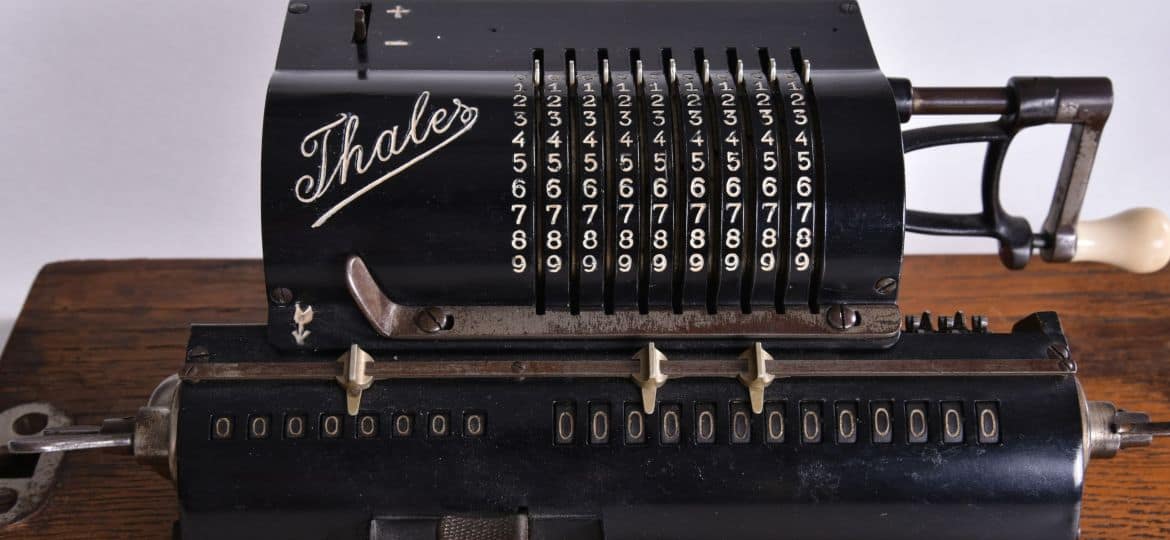
Boris Zlotin: So: the notions of “intelligence” and “artificial intelligence.” People generally have an intuitive sense of what intelligence is—and sometimes that suffices. But artificial intelligence is far more interesting and complex. Is a routine accounting program intelligential? Yes, in a sense. Was a slide rule intelligence? What about counting‑frames, the abacus? These are instruments of intelligence. Human intelligence exists, and it has tools.
And here the contemporary understanding of artificial intelligence becomes interesting. What is called AI today most reminds me of a brilliant song by the modern poet‑singer Timur Shaov: “The world is maimed, the world is frail, everything is being replaced by surrogates: instead of a cat—a Tamagotchi; instead of a man—a vibrator.”
What is called artificial intelligence today is a typical surrogate for human intelligence: it performs only certain functions and far from perfectly. It performs them unnaturally, taking detours instead of shortcuts. When we addressed this issue, we applied our TRIZ methods and undertook a thorough study of brain biology and physiology.
Several hundred books were reviewed, from which I selected four that are most important and interesting for understanding intelligence.
In 1950 James Gibson demonstrated a crucial point: all intelligence—every intellectual operation—derives from a single central, basic operation: recognition. Distinguishing a feather from down, an edible berry from a poisonous one, a man from a woman…
In 1979 Richard Gregory showed how perception actually unfolds step by step—what enters the eye and what follows. He did not delve into the finest biological details but demonstrated the process at a generalized level. That result proved extremely important in prompting us toward the idea of creating recognition software.
In 1982 David Marr proposed a brilliant idea—one that we had also anticipated in TRIZ. We called it “technionics”: the transfer of ideas from engineering to biology (complementary to bionics, which transfers ideas from biology to engineering). Marr argued that regardless of how much one studies biology, one will understand little—the biological organism is too complex in its functioning.
If the biological mechanism is not understood, one should invent a technical implementation and then compare it with the biological analogue. Today the brilliant American biologist Mike Levin is following this path with notable success.
In 1985 Vadim Davydovich Gleyzer published Vision and Thought, in which he brilliantly exposed the biological side of thinking. His experiments, which were utterly ingenious, are described in detail.
The chief conclusion drawn from these and many other books and articles is this: human thought has little in common with what contemporary science calls artificial intelligence—expert systems, artificial neural networks, and linguistic models. Why?
All these technologies demand an enormous amount of computation. Training a linguistic model such as ChatGPT requires months of computation and the electricity consumption of entire power stations.
Anatoly Guin: Boris, I’ll interrupt briefly. We’re talking about pretraining—about the foundational learning of artificial neural networks, specifically the pretraining of a language model. Our brains also have computational mechanisms, but they operate millions of times more slowly than a computer. Yet we learn, or prelearn, in seconds or minutes, while machines require months despite their incredible computational speed. What does this indicate?
Boris Zlotin: The computational approach to recognition is itself antibiological.
Two brilliant scientists—one a biologist, the other a mathematician—McCulloch and Pitts, in 1943 described a model of thinking as a numerical filter. A multitude of facts (pieces of information) fall into the filter; the unconnected facts pass through and disappear. Chains of related facts (patterns, laws, regularities, etc.) remain and become part of the filter, configuring it in their image.
A simple analogy: a sieve into which water mixed with beads is poured. Small beads pass through the holes. But if several beads are tied together with a string, they cannot pass and get caught. That is how the numerical filter is constructed. The problem is that it requires enormous computation. No one has ever observed such filters in humans, or even in mice or bacteria. They do not exist in biology. That implies biology uses a different approach to recognition.
Anatoly Guin: Boris, there is a very important detail here.
The fact is that ultimately McCulloch and Pitts—the first to explain how the brain works—decided to test their theory.
They carried out a brilliant series of experiments on frog’s eyes.
They found that the brain did not function as they had supposed at all, and that their model was incorrect. The discovery struck them painfully. Pitts, the brilliant mathematician, burned all his manuscripts, took to drink, and died a few years later of liver cirrhosis. McCulloch died almost at the same time. It’s terrifying—can you imagine such disappointment? That, unfortunately, is life.
Boris Zlotin: Training a neural network is tuning a numerical filter, and that requires massive computation. We posed the question: how can we do without such filters? And we found a way to do it.
We have known each other for about forty years, and I recognize you at a glance—even with a new hat or glasses, or even if a wasp stings your cheek. What’s the trick? My memory contains many portraits, and memory can generalize to form a single portrait by which I recognize you. We devised a simple method to store many portraits in a machine’s memory, from which the system can find those most similar to the input (analogues) and transfer information from them to the item being recognized. We created software that recognizes in precisely this way and leverages recognition to perform many other intellectual functions.
We call the technology underpinning the software PANC™, or Progressive Associative Neuromorphic Comparator—a neuromorphic comparator. Neuromorphic here means operating like a nervous system. This technology is our principal achievement.
The technology is already fully functional and being used in real-life projects like one comparing nuclei of a dividing cell. PANC™ detects details of great importance to geneticists.
Here are a couple of images: recognition of lung disease from radiographs…

…and face recognition. It doesn’t matter to us what needs to be recognized.

The essential elements are a searchable library and a comparator. The comparator’s key property is ingenious: if we compared one by one—this image with that image, and that with another—we would not finish until the Second coming. Our comparator compares an image simultaneously against thousands or even millions of other images. Everything happens in parallel: performing a thousand comparisons takes almost the same (very small) time as performing one. Moreover, one can compare a hundred images at once against thousands in the library, or thousands against thousands. In other words, performance depends only on the number of cores and the computer’s power.
I will now return to a very important point. Consider this drawing of a river: three streams converge and flow as one powerful, mighty current—a standard motif for rivers. What is significant here?
Artificial intelligence — three powerful converging streams
Biology: understanding cognition and its constraints. Gibson, Gregory, Glezer, and others…
Creativity: pattern-based creativity as an essential component of thought. Altshuller and mechanisms of creativity via the use of patterns.
Computer science: Engelbart and the idea of Augmented Human Intelligence. Hybrid human–machine systems.
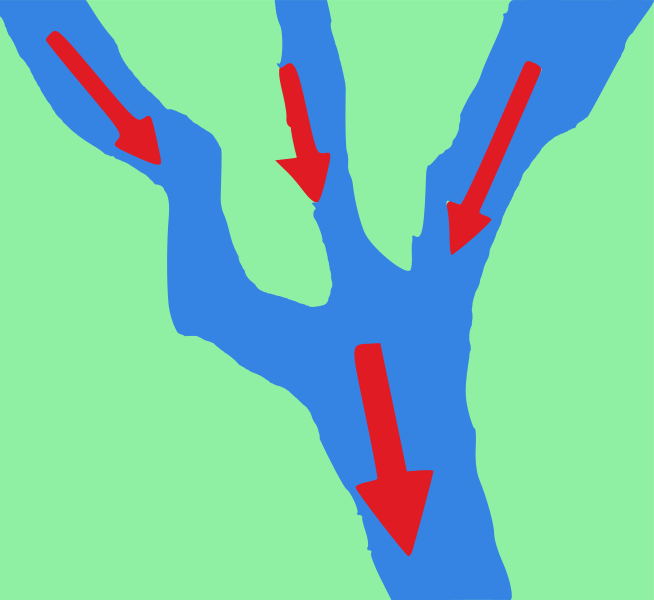
Stream one. Biology. Gibson, Gregory, Marr, Glezer, and other biologists established the foundations for understanding thought. There is a notable point here. When I speak, I don’t have a prewritten script; I have not planned every word in advance. In my mind there exists a non-verbal, unsymbolized model of the situation, which I transform and render into words, word by word—translating thoughts hidden in the subconscious into a verbal form.
Moreover, I can express the same thought in many different ways. That implies each step of thinking—each new word—is the result of a creative process of constructing the utterance and selecting the best formulation. Until artificial intelligence learns to be creative, it is not truly intelligence. Linguistic machines are already capable of creativity, but only at a rudimentary, low‑level kind—trial‑and‑error creativity. This is where an important point comes into play.
Stream two. Human creativity is the result of cooperation between the irrational subconscious and the rational conscious mind. A problem requiring a creative solution may originate in the subconscious or arise from conscious thought. In the subconscious it becomes a kind of mental model, which is processed and transformed there and later emerges into consciousness as verbal images or visual images (in an artist) or musical images (in a musician).
This processing involves two kinds of operations on the model:
- stochastic modification by trial and error;
- systematic modification directed by existing mental patterns in the subconscious.
What is a mental pattern? A law, regularity, trend, or tendency—something that governs thought. Mental patterns are closely linked to understanding causal relationships.
These patterns form in the mind from early childhood. A child drops a toy—it breaks. He drops his bottle—it falls out of reach. He falls himself—he gets bruised. He therefore understands at a subconscious level that without support things fall and that this is undesirable. That is a pattern he applies even to things that have not yet fallen. If a cup falls from the table—don’t do it, or mother will spank you… Over time, having learned to speak, he will say something like “don’t cry over spilled milk.” That’s a verbally expressed pattern.
Language permits many patterns to be expressed in words, but verbalized patterns remain only a small fraction of those in the subconscious. Translating subconscious sensations (pre‑thoughts) into verbal form is difficult and demands serious creativity. All the social and scientific laws we know, codes of conduct, procedures, and the like are verbal patterns.
For a long time, creativity was the human activity least amenable to verbalization. Only in the second half of the twentieth century did Genrikh Altshuller identify and put into words several of the most important patterns—the laws and regularities of creativity. He showed how to construct and apply patterns not by trial and error but logically, consciously, and deliberately.
This significantly raised the level of inventive activity, enabling virtually anyone to invent even without exceptional natural talent. Artificial intelligence must be capable of creativity.
Stream three. Computer science. It’s associated with the computer visionary Douglas Engelbart. 2025 marked the centenary of his birth. On 9 December 1968 in San Francisco he delivered a one‑hour presentation at a major computer conference. In American literature it’s called The Mother of All Demos because he outlined the computers and the web environment in which we now live and work. He demonstrated inventions—the computer mouse, the graphical interface we all use, hypertext, text editors, online conferencing, the cloud, and much else without which our era is inconceivable. In computing history his role is often downplayed; few wish to acknowledge that Apple, Microsoft, and many other companies and authorities grew from his ideas…
In 1962 Engelbart published a brilliant report on the augmentation of intelligence. He did not dispute the theoretical possibility of creating what today is called AGI—artificial general intelligence, a kind of super‑genius. But he argued this is the wrong developmental path: what is needed is not a divine thinker but Computer‑Augmented Intelligence—human intelligence enhanced by computational tools. Software products, expert systems, neural networks, and linguistic models are all augmentations of human intelligence—some better, some worse.
We ourselves learned about Engelbart roughly five years ago. In 1989, together with TRIZ master Alla Zusman, we began developing the first TRIZ‑based software.
Conventional software works like this: a person instructs the machine: “Calculate this, this, and that in this manner,” and the machine performs the calculation.
In our system a person tells the machine: “I want to understand, conceive, or invent this.” The machine replies: “Try doing this, then do that, then try this other thing.” The person acts; ideas emerge; the person records them in the system; the machine then proposes additional steps—“also do this and this”—and so on. An organized, step‑by‑step path to innovation.
We have recently received a commission. We’re working for a company I cannot name, developing a new software platform that uses PANC™ AI to solve business problems. The platform should understand human intent, assist in problem-solving, and create and develop businesses with the aid and participation of artificial intelligence. We expect that over time the platform will be adapted to problems in many other domains—engineering, science, management, medicine, the arts, and so forth.
This is the reality we’re working on today. That is probably all I can say about our current understanding of artificial intelligence.
Anatoly Guin: Thank you, Boris. I propose we frame our next discussion under the slogan “It doesn’t hurt to dream.” Suppose that this concept we invented has already been implemented widely. Suppose Elon Musk has encountered it, invested not our small sums but billions of dollars, and it has become, so to speak, an instrument of civilization. What results might we expect from that?
That will be the topic of our next dialogue. Thank you!